SEND Information
Our Inclusion Lead is Mrs Langon, her email address is senco@thelanes.notts.sch.uk.
On this page you will find information, links and resources to support parents/carers.
Upcoming Information Events
SEND Reports and Support
Ofsted / CQC local SEND inspection surveys
Mental Health & Well-Being

NottAlone provides local mental health advice and help for parents and young people in Nottingham and Nottinghamshire.
Nott Alone
Mental illness can affect anyone, of any age, of any background, at any time. Similar to physical illness, people do not choose to have a mental health difficulty. They also need the appropriate care to get better. We have an important role to play in supporting mental health in young children and adults and this is a developing area of focus for us all.
According to the World Health Organisation (WHO), mental health is “a state of well-being in which the individual realises his or her own abilities, can cope with the normal stresses of life, can work productively and fruitfully, and is able to make a contribution to his or her community”. (4 Jun 2015)
Neurodiverse Parenting Support
A new group advertised for parents of children with Autism, ADHD, Dyspraxia etc "Neurodiverse Parenting Support Group" at Middle Street Resource Centre, Beeston, on the first Tues of the month, starting in Feb 7-9pm. It said to sign up to come along by emailing Blandine.French@nottingham.ac.uk.
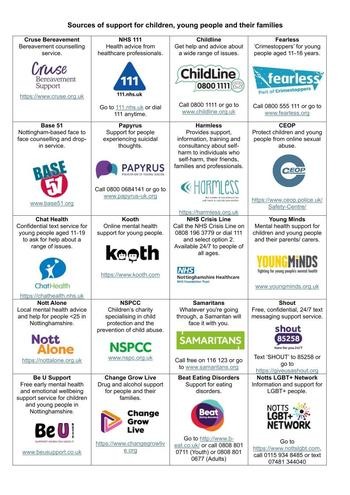
Further help services can be found below:
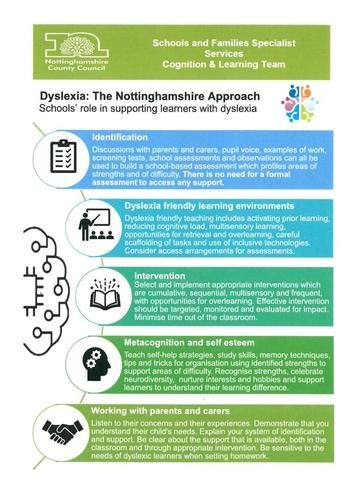

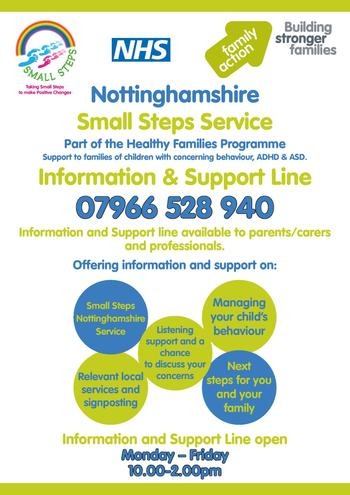
Anxiety in Children
Just like adults, children and young people feel worried and anxious at times. However, if a child's anxiety is starting to affect their well-being, they may need some help to overcome it.
When young children feel anxious, they cannot always understand or express what they are feeling. You may notice that they:
- Become irritable, tearful or clingy.
- Have difficulty sleeping.
- Wake in the night.
- Start wetting the bed.
- Have bad dreams.
In older children you may notice that they:
- Lack the confidence to try new things or seem unable to face simple, everyday challenges.
- Find it hard to concentrate.
- Have problems with sleeping or eating.
- Are prone to angry outbursts.
- Have negative thoughts going round and round their head, or keep thinking that bad things are going to happen.
At this time, the pressure on everyone is even bigger and we are living in uncertain times. On this page, we have tried to put together some resources and links that you may find helpful if you need to try to talk to your children about what is going on. There are also some simple activities that are designed to help children to talk about their feelings or to calm down if they feel anxious.
- NSPCC - Anger Management in Children: How Parents Can Help
Bereavement
Please find below links to websites with some simple ideas to help you in the event of a bereavement in your family or close circle of friends. Please contact the school office if you need any extra support or advice.
Here are some useful websites:
- Hope Again - Youth bereavement support.
- Winston's Wish - Child bereavement charity.
- Cruse Bereavement Support - National bereavement charity.
- Simon Says - Child bereavement support.
- Elephant's Tea Party - School bereavement resources.
- Child Bereavement UK - Supporting families and professionals.
- Jigsaw4u - Helping children through trauma.
- Childline - Free, confidential support.